Waste Removal in London
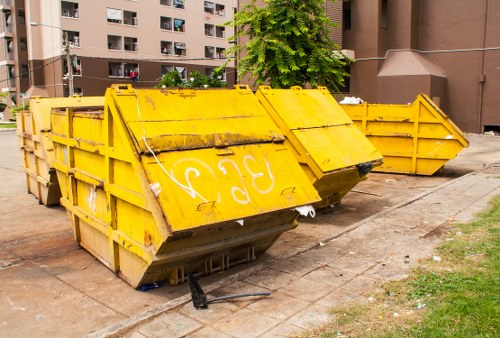
Waste removal in London needs to be practical, tidy and suited to the type of material you want taken away. We provide a straightforward service for homes, flats, landlords and businesses that need rubbish collected without turning the job into a project. The focus is on clear loading, sensible separation of reusable and recyclable items where possible, and a finish that leaves the space ready for its next use.
Our main work covers general waste removal alongside more specific clearances such as bulky items, furniture, mattresses, white goods and mixed household rubbish. If you are comparing options, you can look at rubbish removal for everyday loads, bulky waste collection for larger single items, and furniture clearance when sofas, wardrobes or other household pieces need careful handling. The right service depends on what is being removed, how much there is and how access works.
If you already know what needs clearing, a brief enquiry is usually enough to start. If you are still deciding between a full clearance and a more targeted collection, the sections below explain the main choices in plain English. Tell us what needs going, and we can help you decide which route fits best before you request a quotation.
Household waste removal and mixed clearances
Household waste removal is often about dealing with a mixture of items rather than one category alone. That can include general rubbish from a declutter, sacks of bagged waste, broken small items, cartons, mixed recyclables and a few larger pieces that do not belong with normal bin collections. A good service keeps the process orderly, with attention to sorting what can be separated and loading the rest efficiently so the property is left manageable.
For fuller domestic jobs, our house clearance and home clearance pages cover situations where entire rooms, cupboards, lofts or garages need to be emptied rather than simply a few loose items taken away. Where contents include a specific flat or smaller property, flat clearance is a useful option, especially when stair access, shared entrances or limited parking need to be considered. These services suit households that want the work handled in one organised visit.
Two things make domestic waste removal easier to plan: knowing roughly what is leaving and making access clear enough for safe lifting. You do not need to prepare an exact inventory for every object, but useful detail helps when a load includes awkward items, mixed materials or heavy furniture. If you are ready, you can make an enquiry now. If you prefer to check the available service route first, continue reading.
Bulky items, furniture and appliance disposal
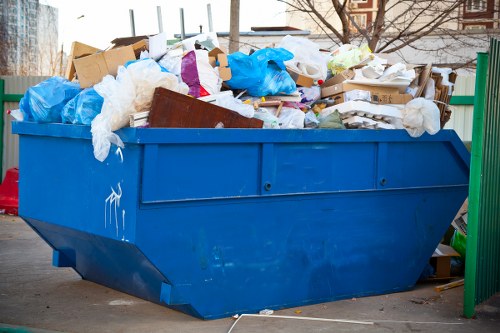
Bulky waste removal is designed for items that are too large, awkward or heavy for ordinary collection. Sofas, beds, mattresses, wardrobes, tables, office chairs and similar pieces often need to be carried carefully through hallways and down staircases before loading. That is why it is helpful to use a service that treats each item as a handling job rather than just a disposal task, especially where doors, lifts or narrow passages are involved.
For dedicated item categories, the site includes sofa removal, mattress disposal, bed disposal and fridge disposal. White goods, furniture and large household fixtures can all need different handling, so a focused service page helps you choose the right approach. Where a customer has several of these items together, combining them into one collection is often more convenient than arranging separate visits, provided the access and load size suit the job.
When bulky items are involved, it is worth checking whether pieces are intact, partially dismantled or already broken, because that affects how they are moved and loaded. If you can describe the item type and approximate number of pieces, the quotation process is usually clearer. Smaller details matter when an item is awkward, heavy or hard to carry, so a few practical notes can save time later.
Builders waste, renovation debris and property work
Waste removal is not only for domestic clear-outs. Renovation and maintenance work can leave behind sacks of mixed debris, timber offcuts, packaging, old fixtures and other builder waste that needs clearing at the end of a job. This sort of work is usually best handled as a tidy loading exercise, with enough flexibility for material that is heavier, dusty or irregularly shaped. The aim is to remove what has accumulated without disrupting the rest of the property more than necessary.
For building-related jobs, the most relevant page is builders waste clearance. For broader property-focused work, property clearance can be appropriate when the contents are mixed and the project goes beyond one trade-specific pile. If a space has been used as storage during works, or if waste has built up across several rooms, a general waste clearance or junk clearance may also fit, depending on the material mix and how much needs to go.
Good planning for building waste starts with access and weight. Some loads are straightforward but messy; others are light enough to carry yet awkward because of shape or quantity. If you are preparing a quotation request, a short description of the material type is more useful than general wording alone. Mixed rubble, timber, packaging and fittings each create a different loading picture, so the clearer the description, the easier it is to match the service.
Commercial waste removal for offices, shops and shared spaces

Commercial waste removal needs a service that can handle varied contents without turning the job into a disruption. Offices may have desks, chairs, filing units and packaging; shops may need stockroom clearances, display units and mixed waste; shared premises may simply need accumulated rubbish removed from service areas. The practical aim is the same: clear the unwanted material efficiently, keep the route of removal orderly and make sure the space is left ready for business use.
Relevant service pages include business waste removal, commercial waste collection, commercial waste disposal and office clearance. Where the job is larger or the premises contain a mixture of fittings and office contents, office clearances gives a broader option. For general materials from retail, storage or shared commercial areas, waste collection and waste disposal are useful reference points.
Commercial jobs benefit from clear access information because loading may need to work around opening hours, building rules or shared entrances. If a site has lifts, loading bays, restricted parking or a managed reception point, it helps to mention that at the enquiry stage. You do not need to produce a perfect manifest; a sensible description of the contents and the setting is usually enough to start the quotation process.
Specialist clearances for lofts, garages and probate work
Some waste removal jobs are really clearances of contained spaces rather than simple item collections. Loft spaces, garages and storage rooms can hold a long list of mixed belongings, from cardboard and broken household items to forgotten furniture and seasonal equipment. These jobs often take a more methodical approach because the materials are not always obvious until the area has been opened up and assessed. Careful removal helps the space return to practical use.
For these situations, loft clearance, garage clearance and probate clearance each serve a different need. Probate-related work tends to require a slower, more considerate approach to mixed contents, while loft and garage jobs often need attention to dust, access and weight carried down from awkward positions. Where the contents are particularly heavy or widespread, large item collection can be a practical addition to the plan.
These clearances are usually easier to quote for when you can say whether the area is mostly full, partly sorted or just holding a few bulky items. That is not about creating paperwork; it is about matching the scale of the job to the right service. If you are arranging a removal from one of these spaces, keep the description simple and factual, then ask for a quotation when you are ready.
Sorting, recycling and material-specific handling
Waste removal should not treat every item as identical. Different materials call for different handling choices, and a thoughtful service will separate what can be directed towards recycling from what needs disposal. This is especially important when a collection includes furniture, small electricals, household goods, cardboard, metal fittings or other mixed contents. The more clearly the load is organised, the easier it is to keep the process efficient and tidy.
To explore related routes, see recycling and rubbish, waste recycling, recycling and sustainability and white goods recycle. For general waste streams, trash collection and garbage collection are straightforward ways to think about the service, while waste removal remains the broadest starting point for customers who are not yet sure which category fits best.
Not every load needs to be sorted by the customer beforehand, but it helps if recyclable items are kept apart from general rubbish where that is easy to do. Clear separation is helpful, not compulsory, and it can make the removal feel more organised. If you have a mixture of materials and you are unsure how to describe them, list the main item types and let the quotation stage do the rest.
How to prepare a quotation request
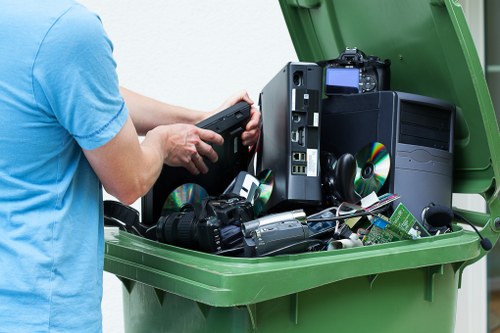
A useful quotation request for waste removal is usually short, accurate and practical. You only need enough detail for the job to be understood: the type of waste, an approximate quantity, where the items are located and any access points that might affect lifting or loading. Photographs can be helpful if you have them, but they are not the only way to explain a job. A plain description works well when the contents are simple and visible.
It also helps to note whether the collection is from a house, flat, office, garage, loft or outdoor area, because each setting has its own access considerations. If items need to come down stairs, through narrow hallways or out of shared premises, say so at the start. That sort of practical detail does not require a long explanation; it just helps the quotation reflect the real work rather than a guess. Once that is clear, asking for a quotation becomes straightforward.
Here is a simple way to prepare your enquiry:
- List the main items or materials to be removed.
- Estimate how much space they take up.
- Say where the items are located.
- Mention any access limits, stairs or parking issues.
- Include any time constraints that matter to you.
About London
London is the capital of the United Kingdom and one of the most layered cities in Europe, shaped by Roman foundations, medieval growth, Georgian planning and modern redevelopment. The River Thames runs through its centre and has long influenced movement, trade and settlement. Across the city, the contrast between historic neighbourhoods and contemporary commercial districts gives London a varied character, from formal squares and terraces to dense streets of shops, offices and mixed-use buildings. The West End, the City of London and the South Bank each represent different parts of that urban story, while countless local centres contribute their own identities through markets, civic buildings, parks and residential streets. Large royal parks such as Hyde Park, Regent’s Park and Greenwich Park offer open green space within the urban fabric, and the city’s museums, galleries, theatres and concert halls support a cultural life that reaches well beyond central districts. Transport connections are equally distinctive, with Underground lines, rail termini, buses, river services and cycling routes linking neighbourhoods that developed at different times and at different scales. Architectural variety is one of London’s defining features: medieval churches, Victorian railway buildings, post-war estates, glass towers and restored warehouses can all appear within a short journey of one another. This mixture of layers, uses and periods makes the city read as both ancient and contemporary, with each district carrying traces of the past while continuing to change. Even within familiar boroughs, side streets and main roads can feel markedly different, which is part of the city’s enduring character and appeal.
Domestic and trade waste collection choices
Some customers need one-off help after a clear-out, while others need a more regular way to remove accumulated waste. The pages on waste collection, rubbish collection and waste collection cover the broad idea, but the right choice depends on the material type and the setting. If the load comes from a household, the emphasis may be on furniture, mixed rubbish and clutter. If it comes from a trade or business setting, the emphasis may be on packaging, fixtures or stockroom waste.
For customers comparing nearby service types, rubbish clearance, waste clearance and junk clearance are useful to distinguish. Clearance usually suggests a fuller or more organised removal from a space, while collection can imply a more direct pickup of loaded material. Neither is automatically better; the better fit is the one that matches the shape of the job. That is why a short, honest description of the waste often matters more than the label itself.
If your load is already bagged or gathered in one area, say so. If it is spread across several rooms, explain that instead. What matters is matching the service to the actual work, not overcomplicating the wording. Once that is sorted, you can decide whether a simple collection, a clearance or a more focused item-specific removal makes the most sense.
Pricing factors and the final step

Waste removal quotations are typically shaped by the volume of material, the type of items, access, labour involved and whether any pieces need special handling. Large furniture, heavy appliances and mixed loads can require more carrying time than bagged waste, and tight access may also affect the work. A sensible quotation reflects those practical factors, which is why accurate descriptions are more valuable than broad estimates. The aim is clarity, not complication.
If you are unsure whether your job fits household removal, bulky item collection, clearance work or a more commercial service, start with the closest description and explain the contents in a sentence or two. That usually gives enough information to guide the next step. For customers who want to compare the broad service routes first, the pages above provide a simple path through the main choices without overloading the decision-making process.
When you are ready, request a quotation and tell us what needs removing. If it helps, keep a note of the main items, the location and any access points before you send your enquiry. For a direct starting point, contact us and ask for a quote today.